Prospective, Multi-center Clinical Study which showed that EyeArt AI system detects diabetic retinopathy with far greater sensitivity than dilated eye exams by general ophthalmologists and retina specialists
Objective
To compare general ophthalmologists, retina specialists, and the EyeArt Artificial Intelligence (AI) system to the clinical reference standard for detecting more than mild diabetic retinopathy (mtmDR).
Design
Prospective, pivotal, multicenter trial conducted from April 2017 to May 2018.
Participants
Participants were aged ≥ 18 years who had diabetes mellitus and underwent dilated ophthalmoscopy. A total of 521 of 893 participants met these criteria and completed the study protocol.
Testing
Participants underwent 2-field fundus photography (macula centered, disc centered) for the EyeArt system, dilated ophthalmoscopy, and 4-widefield stereoscopic dilated fundus photography for reference standard grading.
Main Outcome Measures
For mtmDR detection, sensitivity and specificity of EyeArt gradings of 2-field, fundus photographs and ophthalmoscopy grading versus a rigorous clinical reference standard comprising Reading Center grading of 4-widefield stereoscopic dilated fundus photographs using the ETDRS severity scale. The AI system provided automatic eye-level results regarding mtmDR.
Results
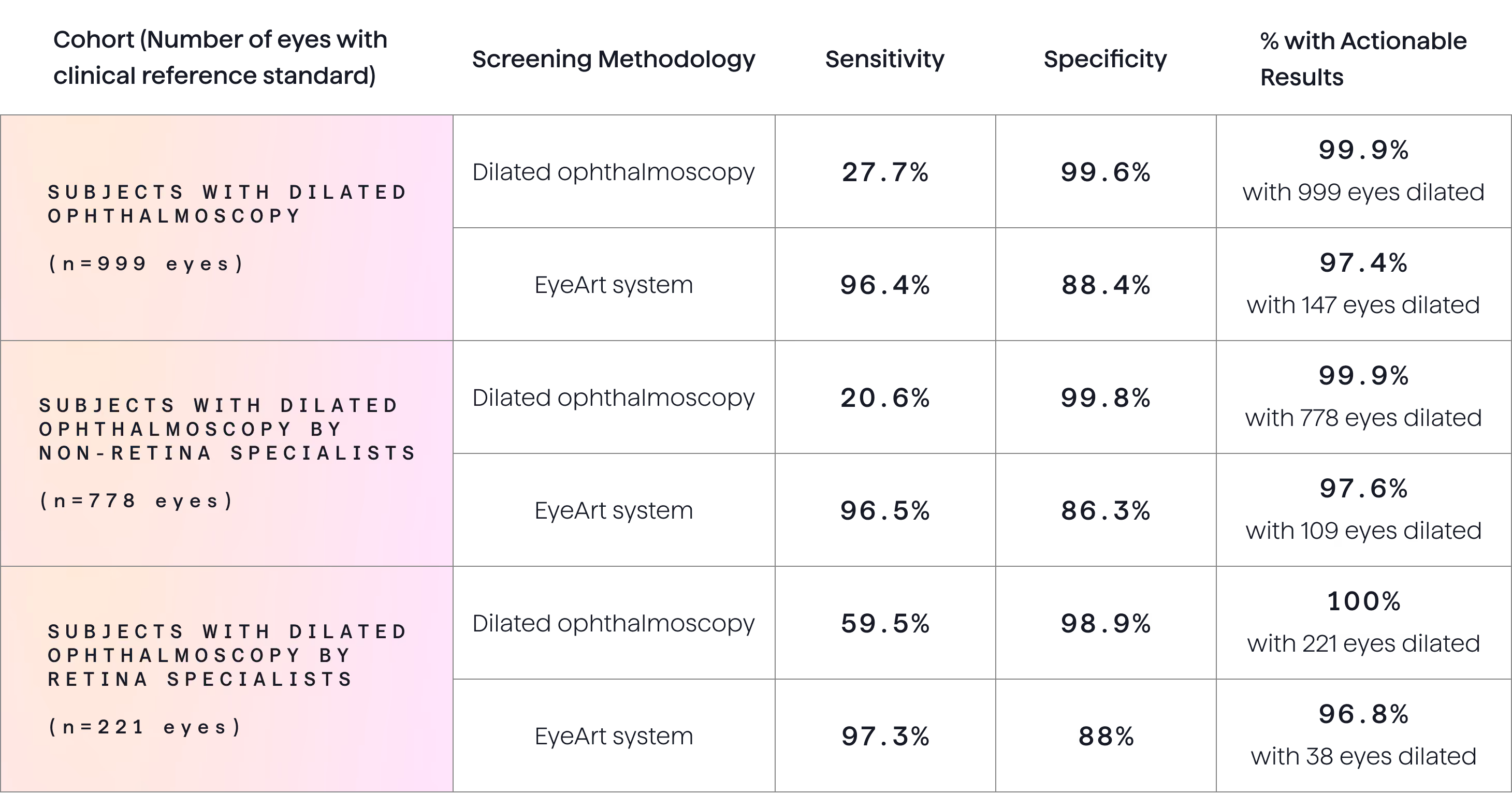
Overall, 521 participants (999 eyes) at 10 centers underwent dilated ophthalmoscopy: 406 by nonretina and 115 by retina specialists. Reading Center graded 207 positive and 792 eyes negative for mtmDR. Of these 999 eyes, 26 eyes were ungradable by the EyeArt system, leaving 973 eyes with both EyeArt and Reading Center gradings.
For identifying more than mild DR (mtmDR), overall sensitivity was 96.4% and specificity was 88.4% for the EyeArt system, while that of ophthalmologists’ dilated exams was 27.7% and 99.6% respectively on the identical cohort of study participants. The study also reported that the EyeArt system generated actionable results for more than 97% of eyes with most (85.3%) not requiring dilation. In contrast, dilated exams provided actionable results for 99.9% of eyes but required all patients to be dilated.
Conclusion
The AI system had a higher sensitivity for detecting mtmDR than either general ophthalmologists or retina specialists compared with the clinical reference standard. It can potentially serve as a low-cost point-of-care diabetic retinopathy detection tool and help address the diabetic eye screening burden.
Link to full study: https://www.ophthalmologyscience.org/article/S2666-9145(22)00117-8/fulltext