Age-Related Macular Degeneration (AMD). A leading cause of progressive vision loss.

AMD often develops without early symptoms, making awareness, imaging, and timely clinical evaluation essential to preserving sight.

What is AMD?

Age-related macular degeneration (AMD) is a progressive eye disease that can blur one's central vision. It damages the macula, the portion of the retina responsible for sharp, central vision (light-sensitive tissue at the back of the eye). As a leading cause of vision loss in older adults, it often develops silently without early symptoms. While AMD rarely causes complete blindness, it can severely blur the center of the visual field, making essential daily activities like reading, driving, and recognizing faces extremely difficult for patients.
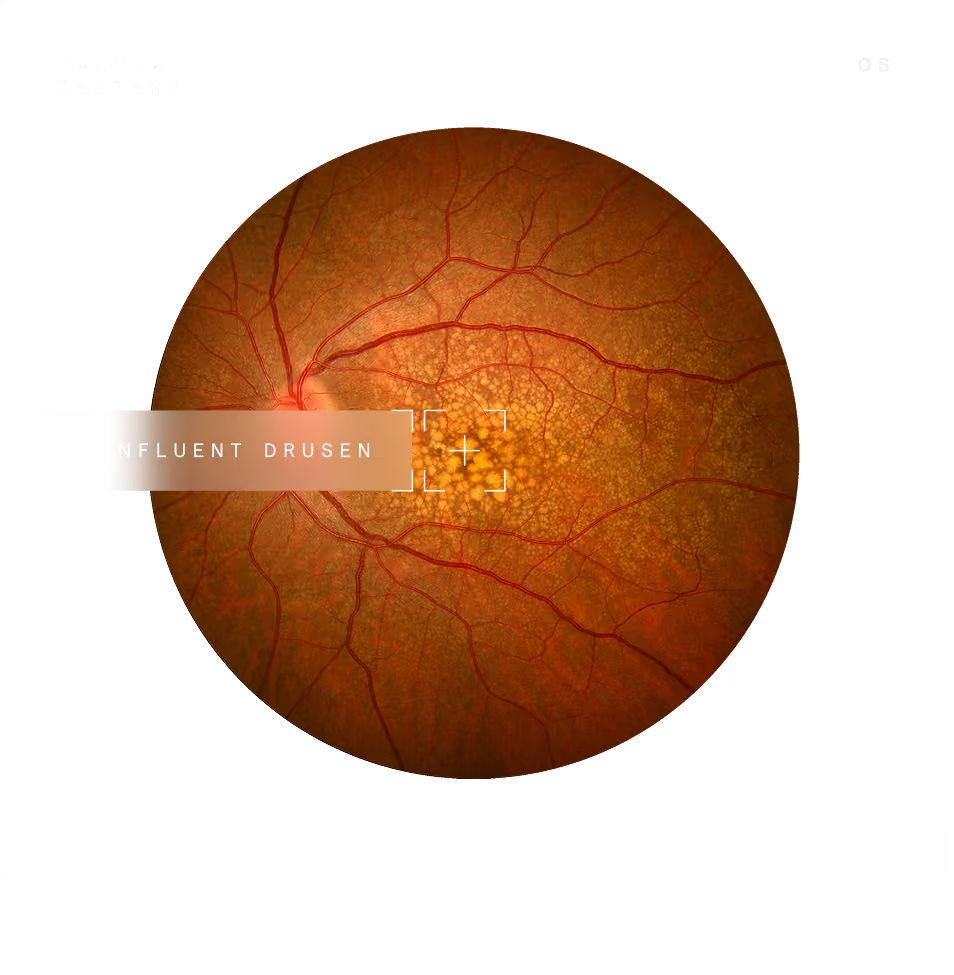
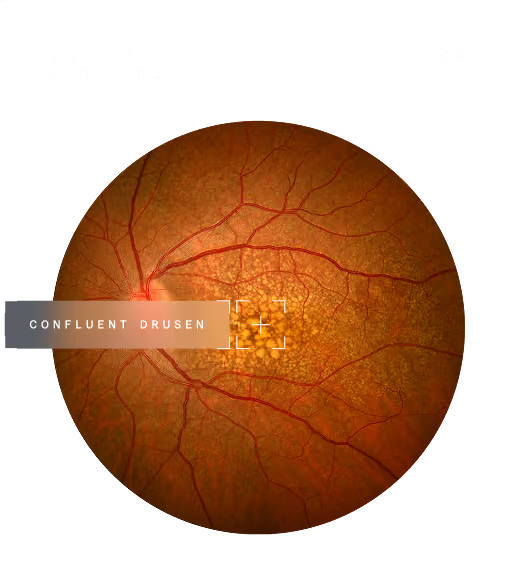
Fundus photo showing retina affected by suspected intermediate AMD with visible confluent drusen.Fundus photo showing retina affected by suspected intermediate AMD with visible confluent drusen.

Why early identification of AMD matters

Since AMD progresses silently, the onset of symptoms can mean that irreversible vision loss has already occurred. Early identification is vital to shift the clinical focus toward proactive monitoring and lifestyle interventions. By addressing controllable risk factors like smoking and diet while ensuring timely referrals to specialists, clinicians can significantly slow disease progression. This sense of urgency is key to preserving patient independence and long-term wellbeing.

How AI supports AMD awareness and care pathways

Our technology leverages a recognized approach to detect signs of disease, utilizing the Beckman Scale to identify suspected intermediate and late-stage AMD. By helping identify patients with AMD, AI transforms a standard scan into a scalable imaging model that broadens access to care. As retinal datasets grow, our longitudinal understanding improves, ensuring high-risk patients are fast-tracked through care pathways for expert clinical evaluation.

288M

people worldwide projected to be living with AMD by 2040 (source)

$343B

global cost of visual impairment due to AMD (source)

1 in 3

people in the US age 75+ estimated to have some form of AMD (source)

ECONOMIC IMPACT

Prevent blindness

Extend access

Generate preventive care revenue

Reduce downstream cost

Improve quality metrics

BUILT TO EXPAND

Same platform

Same camera(s)

Same workflow

New diseases/cameras added with clearances

Learn more about our full-spectrum solution.

Eyenuk has the most validated autonomous AI in healthcare.

See the proof with your own eyes.

FDA 510(k)-cleared: The only autonomous AI for simultaneous mtmDR and vtDR detection

Disease detection accuracy: Over 90% sensitivity and specificity demonstrated in multiple, large independent clinical studies

Global compliance: EU MDR Class IIb for DR, AMD, and GOND detection

Secure and certified: SOC 2 Type 2, HIPAA, GDPR, and ISO 13485:2016 (MDSAP) compliant for maximum data safety

Real-world scale: 500K+ patients screened across primary care, diabetes centers, and specialty clinics worldwide

Camera compatibility: Indicated for use with multiple leading retinal camera manufacturers

View the clinical evidence for yourself.

Transform every eye into a gateway to understanding.

Start autonomous retinal AI screening in your clinic today.