Prospective, multicenter pivotal clinical trial of the EyeArt system across 15 US clinics
Objective
To evaluate the safety and accuracy of an artificial intelligence (AI) system (the EyeArt Automated DR Detection System, version 2.1.0) in detecting both more-than-mild diabetic retinopathy (mtmDR) and vision-threatening diabetic retinopathy (vtDR).
Design, Setting, and Participants
A prospective multicenter cross-sectional diagnostic study was preregistered (NCT03112005) and conducted from April 17, 2017, to May 30, 2018. A total of 942 individuals aged 18 years or older who had diabetes gave consent to participate at 15 primary care and eye care facilities. Data analysis was performed from February 14 to July 10, 2019.
Main Outcomes and Measures
Primary outcome measures included the sensitivity and specificity of the AI system in identifying participants’ eyes with mtmDR and/or vtDR by 2-field undilated fundus photography vs a rigorous clinical reference standard comprising reading center grading of 4 wide-field dilated images using the ETDRS severity scale. Secondary outcome measures included the evaluation of imageability, dilated-if-needed analysis, enrichment correction analysis, worst-case imputation, and safety outcomes.
Findings
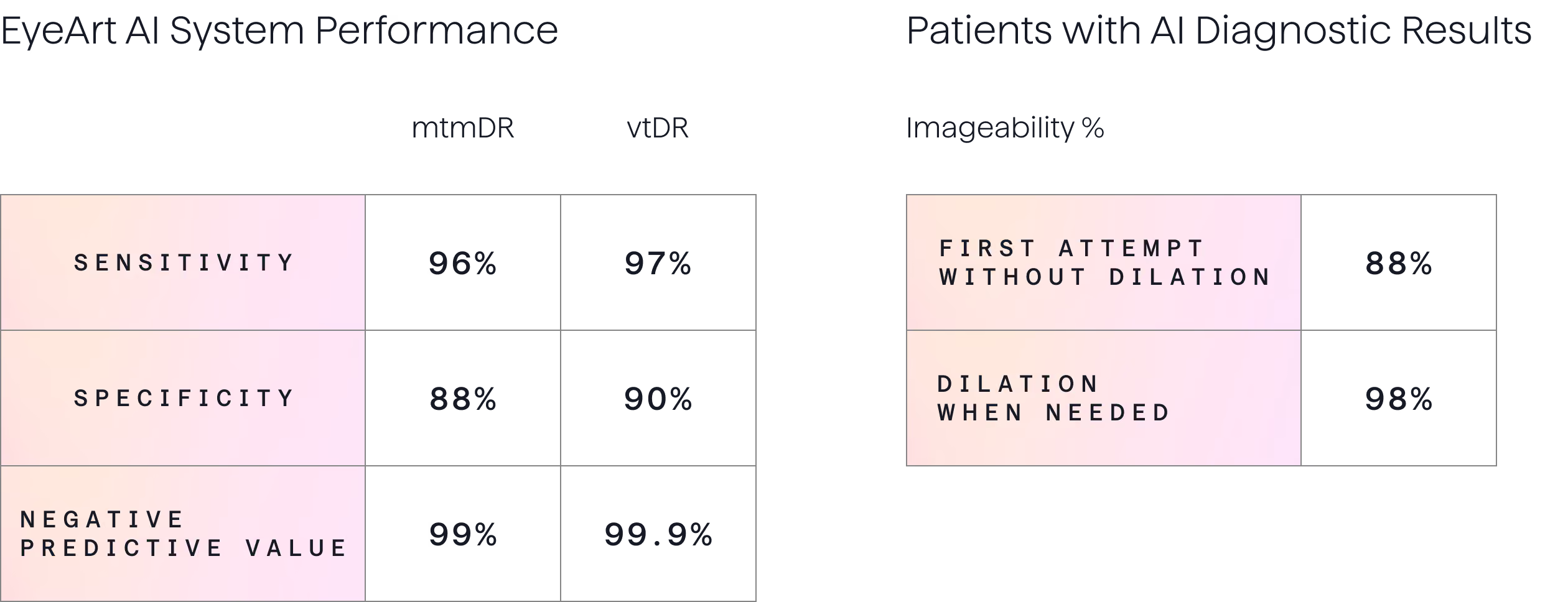
Of 942 consenting individuals, 893 patients (1786 eyes) met the inclusion criteria and completed the study protocol. In this multicenter cross-sectional diagnostic study including 942 individuals with diabetes, the accuracy of the EyeArt autonomous AI system vs the reference standard was high (mtmDR sensitivity: 96%, specificity: 88% and vtDR sensitivity: 97%, specificity: 90%). The AI system successfully graded more than 97% of the eyes scored manually, with 88% not requiring dilation.
Conclusion and Relevance
This prospective multicenter cross-sectional diagnostic study noted safety and accuracy with use of the EyeArt Automated DR Detection System in detecting both mtmDR and, for the first time, vtDR, without physician assistance. These findings suggest that improved access to accurate, reliable diabetic eye examinations may increase adherence to recommended annual screenings and allow for accelerated referral of patients identified as having vtDR.
Link to full study: https://jamanetwork.com/journals/jamanetworkopen/fullarticle/2786132